As soon as your child starts crawling or walking, everyday household items suddenly become potential hazards. Setting up proper childproof home security isn’t just about one or two safety gadgets — it requires a room-by-room approach to catch risks you might otherwise overlook.
This guide walks through practical, room-specific safety measures to help you create a secure environment for your child throughout your home.
Why a Room-by-Room Approach Works Best
Many parents focus only on obvious hazards, but childproof home security requires looking at each room through a child’s perspective.
Benefits of this approach:
- Identifies hidden risks specific to each room’s function
- Prevents a false sense of security from partial childproofing
- Allows you to prioritize based on how often each room is used
- Makes the process more manageable by breaking it into smaller tasks
Walking through each room at your child’s eye level often reveals hazards adults typically miss.
Childproofing the Kitchen
The kitchen contains some of the highest-risk hazards in any home, making it a top priority for childproof home security.
Key kitchen safety steps:
- Install safety locks on lower cabinets, especially those storing cleaning supplies
- Use stove knob covers to prevent accidental activation
- Keep sharp objects and small appliances out of reach
- Store cleaning chemicals in high, locked cabinets
(Internal link suggestion: link to “Eco-Friendly Cleaning Products Worth Switching To”)
Since kitchens often have quick temperature changes and sharp tools, consistent supervision alongside these safety measures is essential.
Childproofing the Bathroom
Bathrooms present unique risks due to water, chemicals, and hard surfaces, requiring specific attention in your childproofing plan.
Bathroom safety checklist:
- Install toilet lid locks to prevent accidental access
- Use non-slip mats inside and outside the tub
- Store medications and toiletries in locked cabinets
- Set water heater temperature to avoid accidental scalding
- Never leave standing water unattended, even briefly
These precautions significantly reduce common bathroom-related accidents, which are among the most frequent childproofing concerns for young children.
Childproofing the Living Room
The living room often has the most furniture and electrical hazards, making it essential for comprehensive childproof home security.
Living room safety measures:
- Anchor heavy furniture like bookshelves and TV units to walls
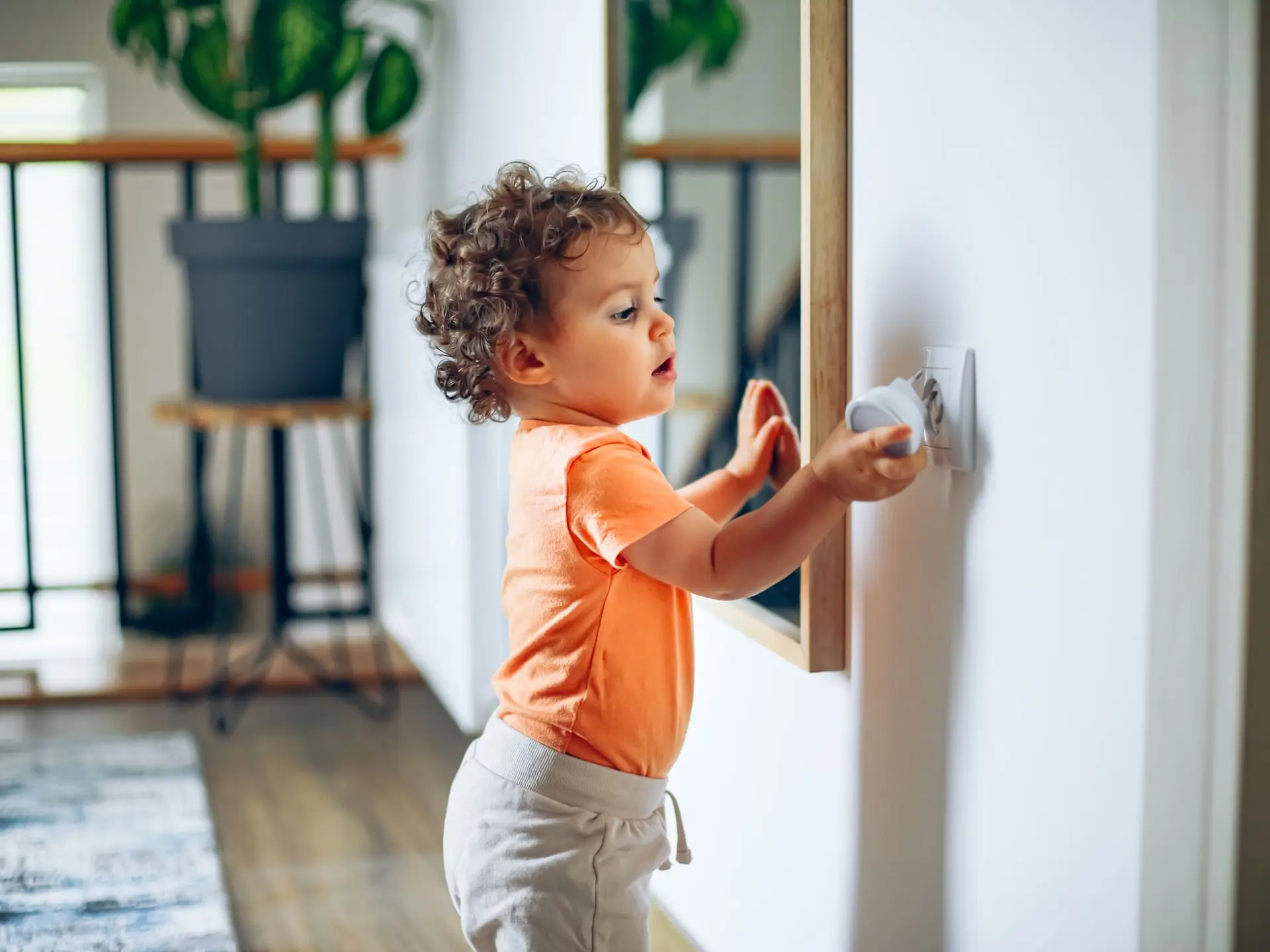
- Cover electrical outlets with safety plugs
- Secure loose cables and wires out of reach
- Add corner guards to sharp furniture edges
- Keep small decorative items and choking hazards out of reach
(Internal link suggestion: link to “Minimalist Interior Design Tips for a Clutter-Free Home”)
A clutter-free, well-secured living room reduces both tripping hazards and access to dangerous items.
Childproofing Bedrooms
Bedrooms require specific safety considerations, especially as children transition from cribs to beds.
Bedroom safety tips:
- Ensure crib slats meet safe spacing standards to prevent entrapment
- Remove pillows, soft toys, and loose bedding from infant sleeping areas
- Install window guards or locks to prevent falls
- Secure tall dressers and wardrobes to walls
- Keep cords from blinds or curtains out of reach
Following these steps helps create a genuinely safe sleeping and play environment throughout early childhood.
Childproofing Staircases and Hallways
Staircases pose significant fall risks and are a critical part of any childproof home security plan.
Staircase safety measures:
- Install safety gates at both the top and bottom of staircases
- Ensure gates are properly secured and cannot be easily pushed open by a child
- Add non-slip strips on stairs if flooring is smooth or polished
- Keep hallways clear of clutter and tripping hazards
(Internal link suggestion: link to “Best Home Security Systems for Renters and Homeowners”)
Staircase gates should remain in place until your child is old enough to navigate stairs safely and independently.
Childproofing Balconies and Windows
For Indian homes with balconies, this area requires special attention as part of your childproof home security setup.
Balcony and window safety steps:
- Install balcony grills or safety nets with narrow spacing
- Ensure grill gaps are too small for a child to squeeze through
- Keep furniture away from balcony railings to prevent climbing
- Add window locks or restrictors to prevent accidental falls
Balconies and windows are frequently overlooked in childproofing checklists but represent serious fall risks if left unsecured.
Outdoor and Garden Area Safety
If your home has a garden or outdoor play area, additional childproofing steps help maintain a safe environment.
Outdoor safety considerations:
- Secure gates leading to outdoor areas with child-safe locks
- Remove or fence off any water features, like small ponds
- Check for poisonous plants and remove them if present
- Store gardening tools and chemicals in locked storage
(Internal link suggestion: link to “Balcony Garden Ideas for Small Apartments”)
Outdoor spaces should be supervised even after childproofing, as new hazards can appear seasonally.
FAQs: Childproof Home Security
1. At what age should I start childproofing my home? It’s best to start childproofing once your baby begins crawling, typically around 6-8 months of age.
2. What is the most important room to childproof first? The kitchen and bathroom are usually the highest priority due to sharp objects, chemicals, and water hazards.
3. Are safety gates necessary if I supervise my child closely? Yes, safety gates provide an essential extra layer of protection, even with close supervision.
4. How do I childproof balconies safely? Install narrow-gap safety grills or nets and keep furniture away from railings to prevent climbing.
5. Do I need to childproof electrical outlets in every room? Yes, any accessible outlet should have safety covers, regardless of which room it’s in.
6. When can I stop using childproofing measures? Most childproofing measures can be gradually removed as your child grows older and understands safety boundaries, typically around ages 4-5.
Conclusion
Creating effective childproof home security requires a thoughtful, room-by-room approach that addresses the specific risks in each space. From kitchen cabinet locks to balcony safety grills, these small precautions significantly reduce the risk of accidents throughout your home.
Key takeaways:
- Address kitchen and bathroom hazards as top priorities
- Secure furniture, staircases, and balconies against falls
- Don’t overlook outdoor areas and garden spaces
- Reassess childproofing measures as your child grows
Ready to make your home safer? Start with one room today, and work through this checklist systematically to give your family complete peace of mind.